
A bookshelf that only holds books is a storage unit. A bookshelf that mixes books with objects, plants, art and breathing room is the most personal piece of furniture in a small apartment — and the one guests actually stop to look at. The difference is not money or size; it is a handful of styling rules that anyone can learn in an afternoon.
The 14 ideas below are built for small spaces: standard bookcases, floating shelves and the awkward nooks where books actually live in apartments. Follow them and your shelves will look curated rather than crammed, without buying a single new book.
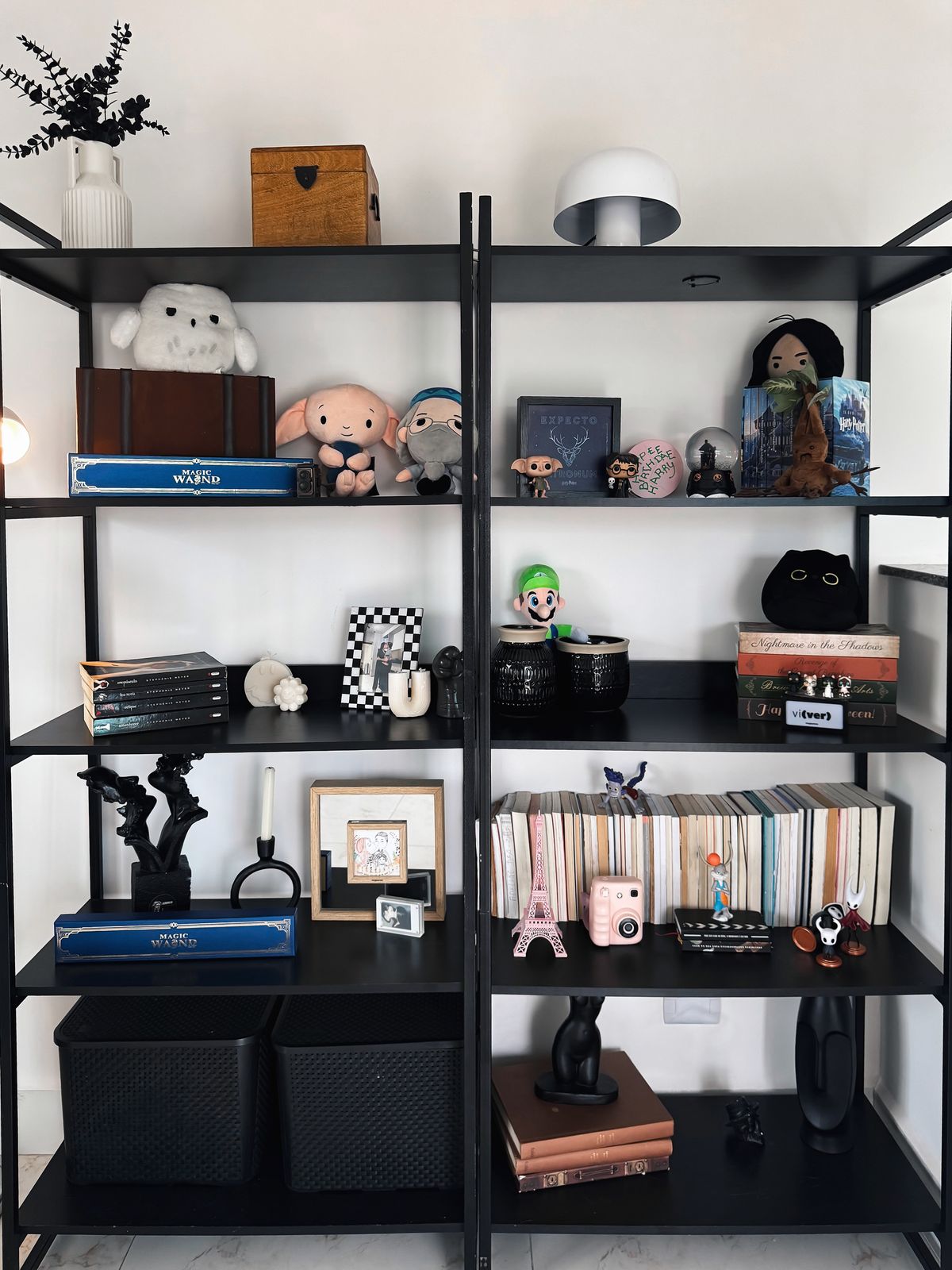
1. Start by Emptying the Shelf Completely
Styling never works on top of existing clutter. Take everything off one shelf at a time, dust it, and only put back what earns its place: books you love or actually read, objects with a story, and a plant or two. The rest goes to another room, a box, or a donation bag.
An emptied shelf also shows you what you really have. Most people discover they own three copies of the same kind of object and no breathing room at all — and that discovery alone fixes half the problem.
2. Leave One Third of Every Shelf Empty
The golden rule of bookshelf styling is negative space: aim for roughly two-thirds filled, one-third empty. Empty space is what makes the filled space look intentional instead of stuffed. A shelf packed edge to edge reads as storage no matter how nice the books are.
Put the empty space where it counts — at the ends of rows, above short stacks, and on at least one shelf per bookcase that holds a single object. The eye needs somewhere to rest, and empty shelf is that rest.
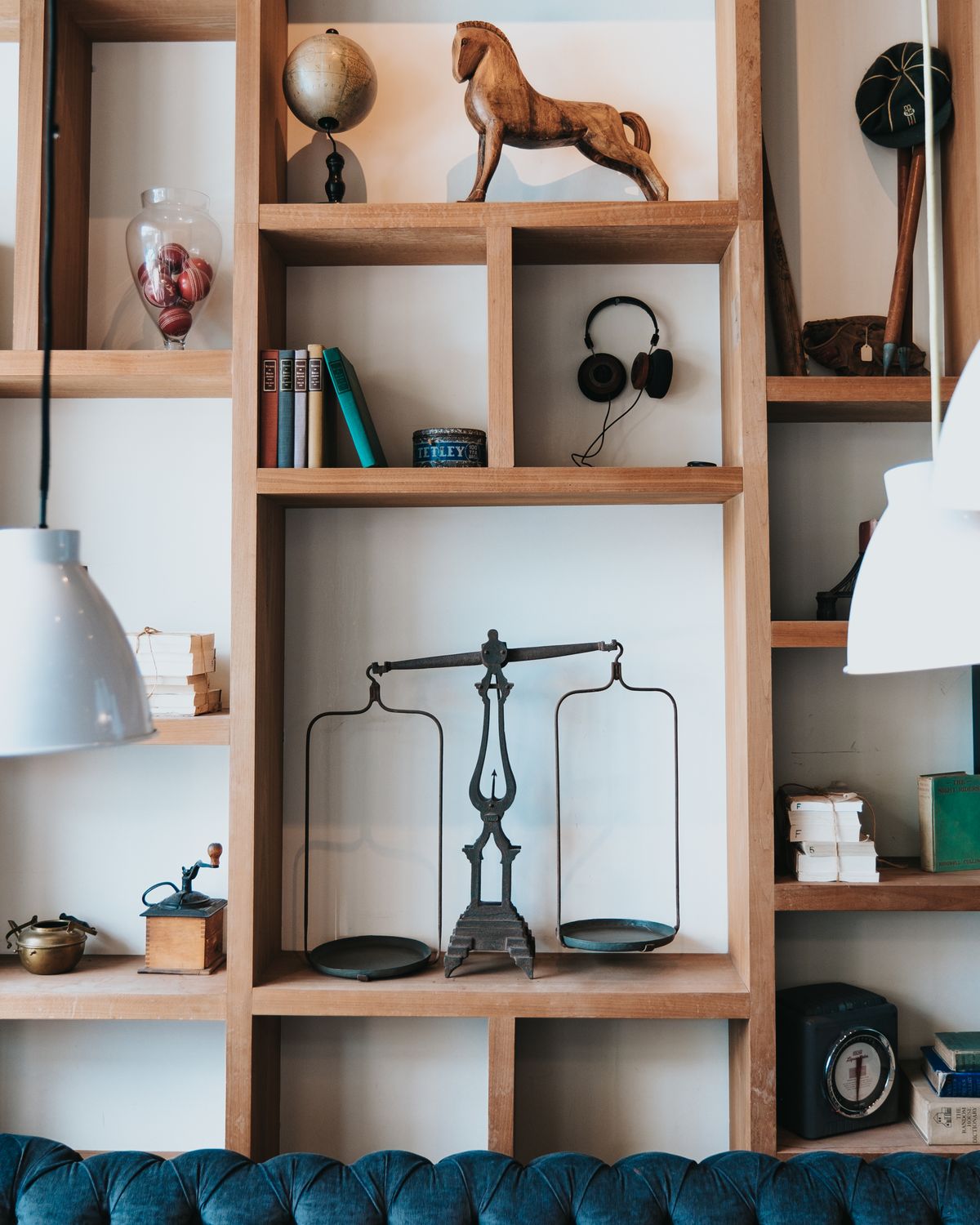
3. Vary the Orientation: Vertical and Horizontal
Rows of vertical books are monotonous; a shelf of nothing but horizontal stacks is a warehouse. Mix them: a run of vertical books, then a horizontal stack of three or four with a small object on top, then verticals again. The rhythm change is what makes a shelf interesting to look at.
Horizontal stacks also create display surfaces mid-shelf. A candle, a small plant, or a framed photo on top of a stack turns a pile of books into a vignette without adding a single new object.
4. Group Books by Colour, Loosely
Grouping books by spine colour is the fastest visual upgrade there is. You do not need a perfect rainbow — loose colour families (warm reds and oranges together, blues and greens together, neutrals together) are enough to make a shelf look calm and deliberate.
If a rainbow arrangement feels too precious for you, group by height instead: tall books together, short books together. Either system beats the random shuffle most shelves live with, and both make finding a book easier.
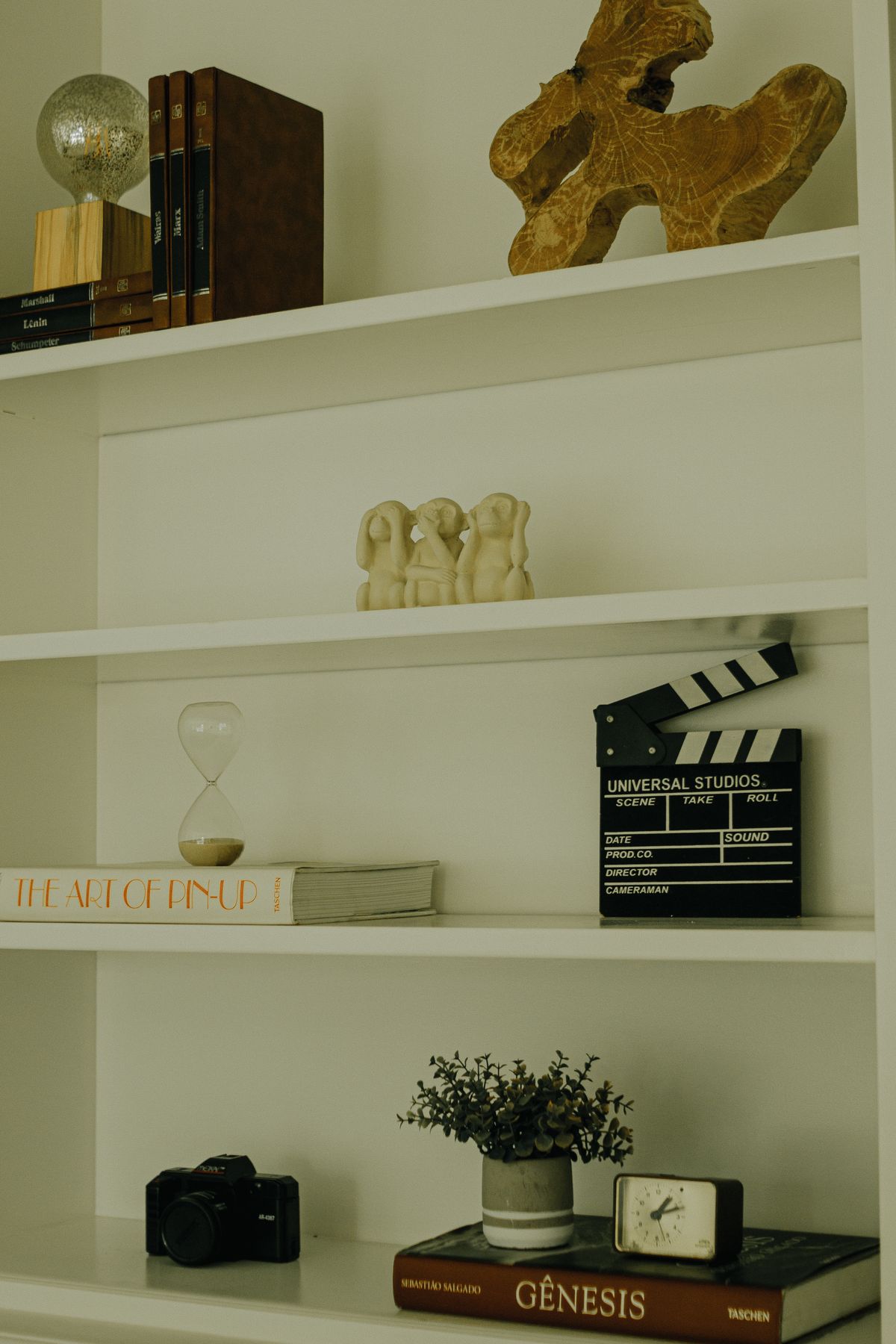
5. Add Objects in Odd Numbers
Objects look better in odd numbers: one, three, or five. A single sculptural piece on a shelf is a statement; three small objects of different heights form a group the eye reads as one display. Even numbers tend to look like pairs of bookends, formal and stiff.
Vary the heights within each group — tall, medium, short — so the arrangement has a shape instead of a flat line. A tall vase, a medium candle and a small framed photo is a complete vignette all by itself.
6. Let One Shelf Be Pure Display
Every bookcase needs one shelf with no books at all: a small collection of objects, a plant, a piece of art leaned against the back. That shelf is the visual pause that makes the book-filled shelves around it look intentional instead of overwhelming.
Rotate this display shelf with the seasons — a pumpkin in autumn, a shell in summer, a candle cluster in winter — and the whole bookcase feels alive without any real effort.
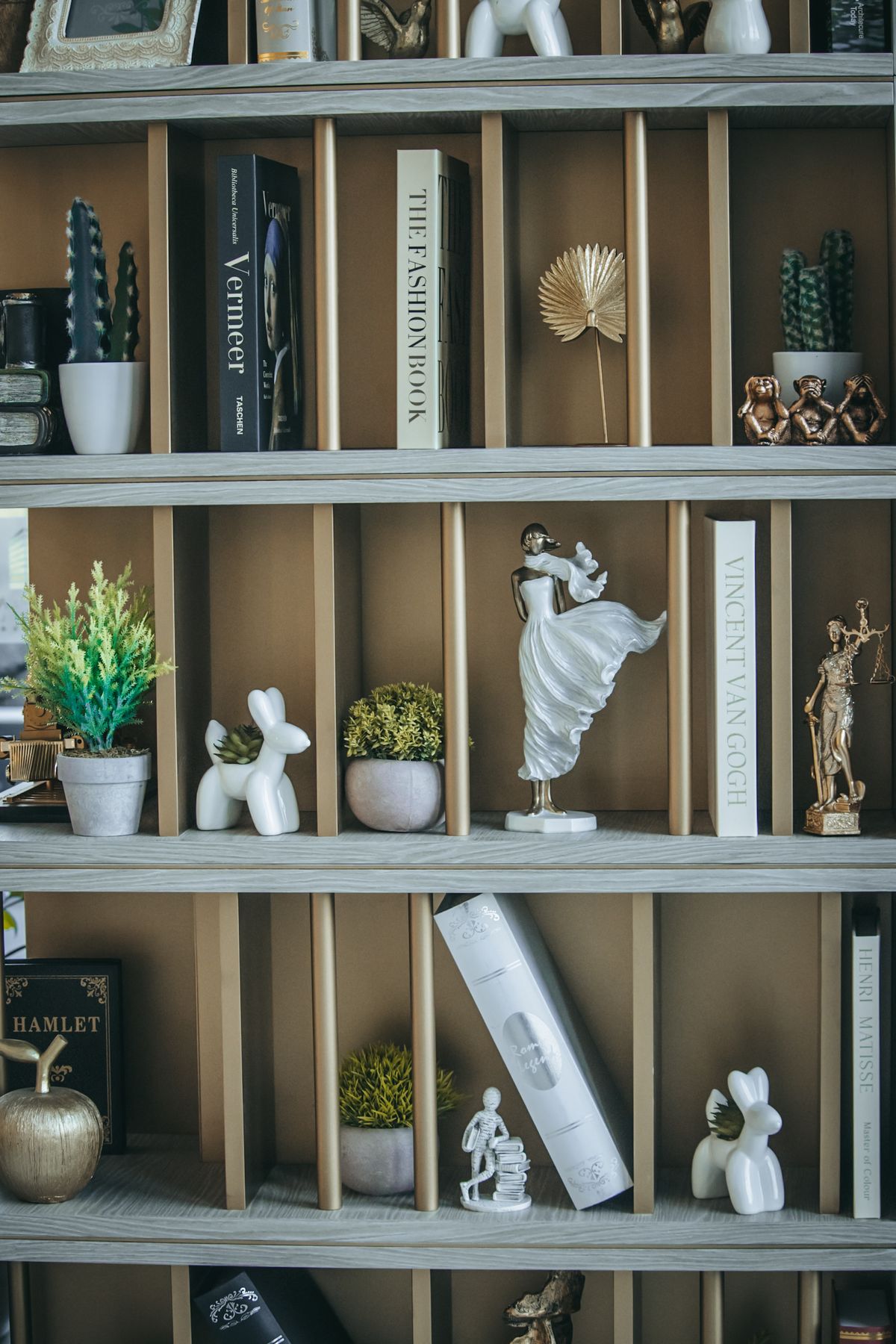
7. Use Plants to Soften the Rectangles
Bookshelves are all rectangles, and rectangles get boring. A trailing plant spilling over a shelf edge, a small potted plant tucked between stacks, or a vase of eucalyptus breaks the grid with organic shapes. One plant per bookcase is plenty; five is a jungle.
Trailing plants work best on high shelves, where they can hang without blocking books. Small upright plants suit mid-level shelves, where they peek out between stacks instead of hiding behind them.
8. Lean Art Against the Back
Small framed prints leaned against the back of a shelf, behind a row of books or a stack, add depth that flat rows never have. The frame peeking above the books gives the shelf a layered, collected feel — like a home that grew over time rather than a showroom.
Use art you already own: postcards, prints from old calendars, children's drawings in simple frames. The art does not need to be valuable; it needs to be personal.
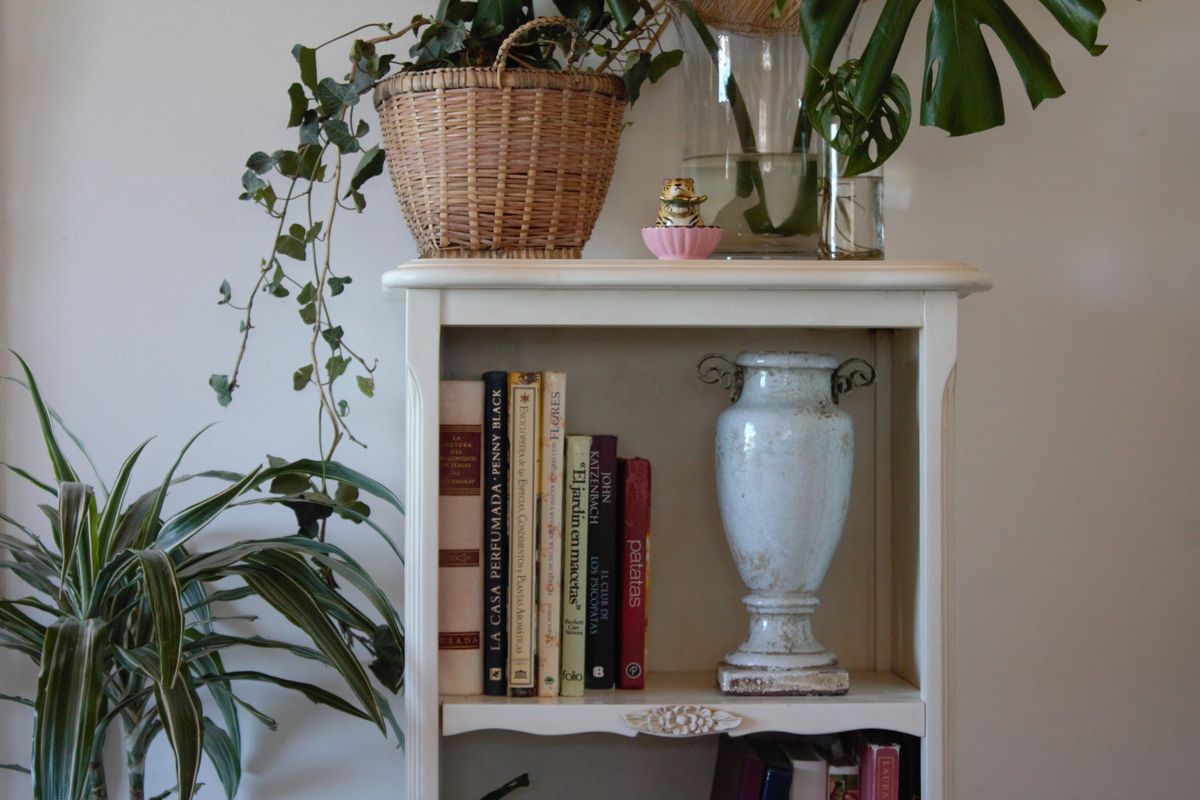

9. Style in Triangles, Not Lines
The best shelf arrangements form loose triangles: a tall object at one end, a medium object in the middle, a short one at the other end — or the same shape across two shelves, with the eye moving up and down. Triangles feel dynamic; straight lines of equal-height objects feel like a shop display.
Step back and squint at each shelf. If you see a flat skyline, adjust one object's height. If you see gentle peaks and valleys, the shelf is done.
10. Keep the Top of the Bookcase in Mind
The top of a bookcase is a shelf too, and it is the most visible one in the room. A tall plant, a large basket, or a single piece of art up there finishes the bookcase; a pile of random boxes up there ruins it. Treat the top as the bookcase's roofline.
If the bookcase is short, the top is also prime display space for taller objects that do not fit inside: a large vase, a stack of oversized books, a sculptural lamp.
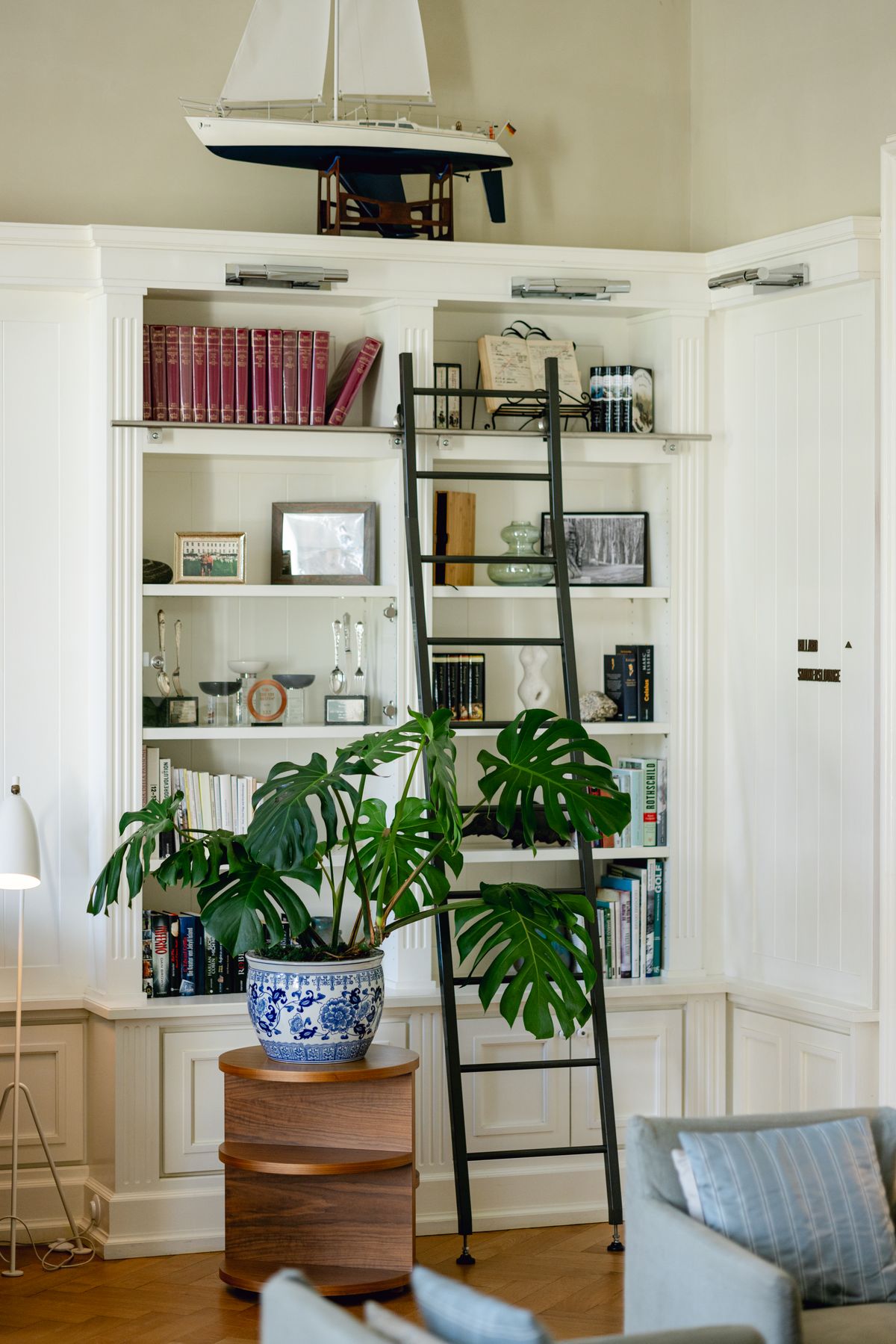
11. Hide the Ugly, Show the Beautiful
Not every book deserves display. Paperbacks with cracked spines, old textbooks and reference books you never open can live on the lowest shelf, behind a basket, or in a closed cabinet. Display shelves are for the books that look good and mean something.
Baskets on the bottom shelf are the classic fix: they hide the ugly books, hold magazines and chargers, and add texture. One or two baskets per bookcase is enough — more turns the bookcase into a closet.
12. Light the Shelves if You Can
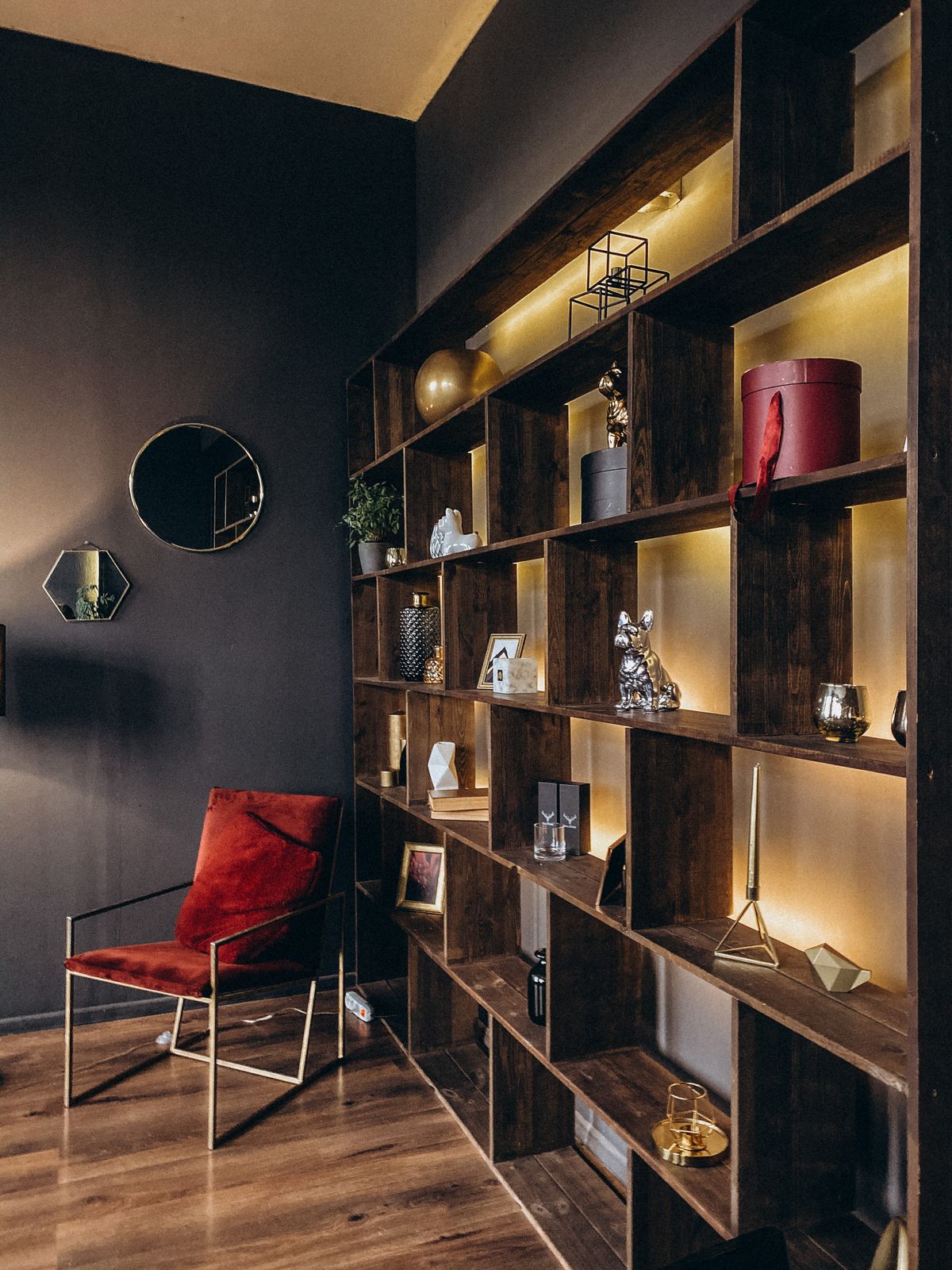
A small LED strip under each shelf, or a single picture light on the top shelf, transforms a bookcase at night. Lit books and objects glow; unlit ones disappear into shadow. Battery-powered LED strips with a remote make this a renter-friendly ten-minute job.
Warm white light suits bookshelves best — it makes wood glow and colours look rich. Cool white light on a bookshelf feels like a library warehouse, not a living room.
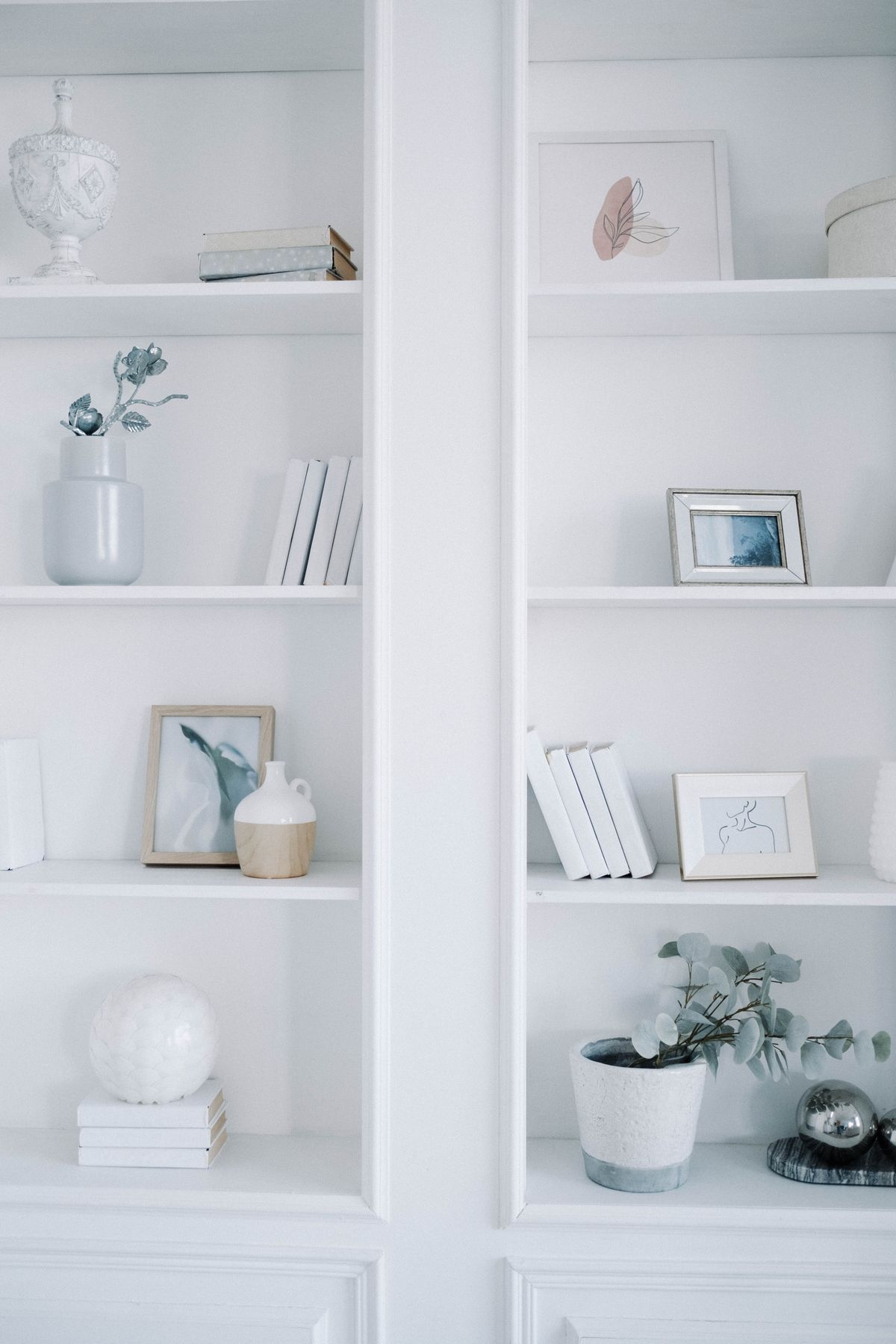
13. Edit Ruthlessly, Then Stop
Styling has a finish line, and it is earlier than most people think. When a shelf looks good from across the room, stop. The temptation to add one more object is what turns curated back into cluttered, and the last object added is almost always the one that should come off.
Live with the shelf for a week before changing it. Shelves that look right on day one and still look right on day seven are done; shelves you keep fiddling with usually need something removed, not added.
14. Make It Yours, Not a Showroom
The best bookshelves break one rule on purpose: a child's drawing next to a first edition, a travel souvenir beside a classic, a plant that is slightly too big for its shelf. Those personal breaks are what make a shelf yours instead of a catalogue page.
Follow the rules above to get to good, then add one thing that is purely you. That is the difference between a styled shelf and a shelf that tells a story.
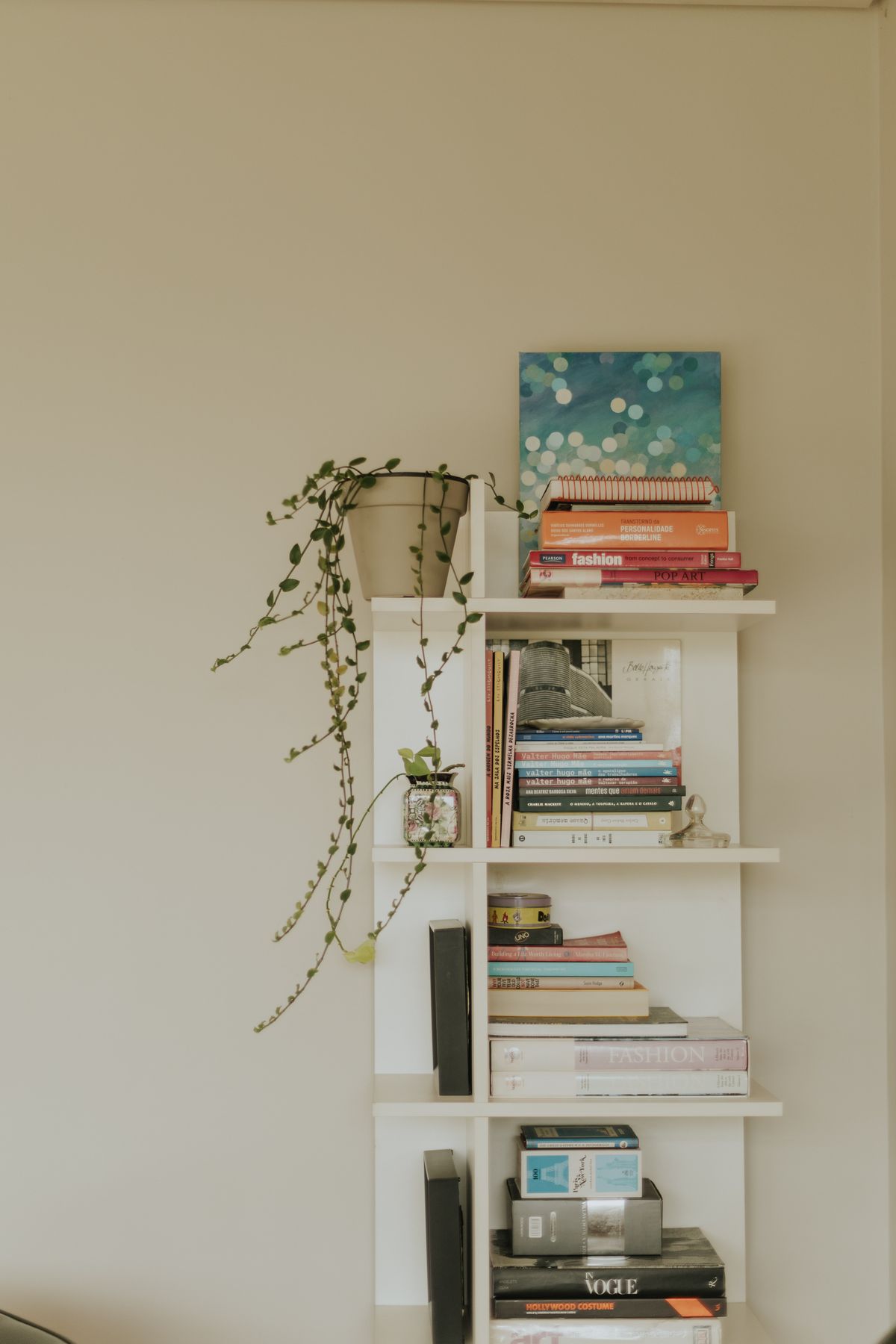
A curated bookshelf is not about owning beautiful things — it is about giving the things you already own room to breathe. Empty a shelf, vary the orientations, leave space, and let one personal object break the rules.
More ideas for your small space: our cozy reading corner ideas give your books a place to be read, DIY wall decor ideas use the same styling rules on your walls, and small living room ideas keep the room your shelves live in feeling open.



0 Comments