
12 Small Apartment Spice Storage Ideas for Tiny Kitchens
Spices are small, but in a tiny kitchen they cause outsized chaos: a dozen mismatched jars tumbling in a cabinet, labels you cannot read, duplicates bought because you forgot you owned cumin. Good spice storage is not about a pretty Instagram wall — it is about finding the right jar in three seconds while dinner is on the stove, keeping spices fresh, and freeing a whole shelf for something else. Whether you have one drawer, one cabinet door, or just a strip of wall, these 12 ideas fit spice storage into the smallest kitchens without a renovation.
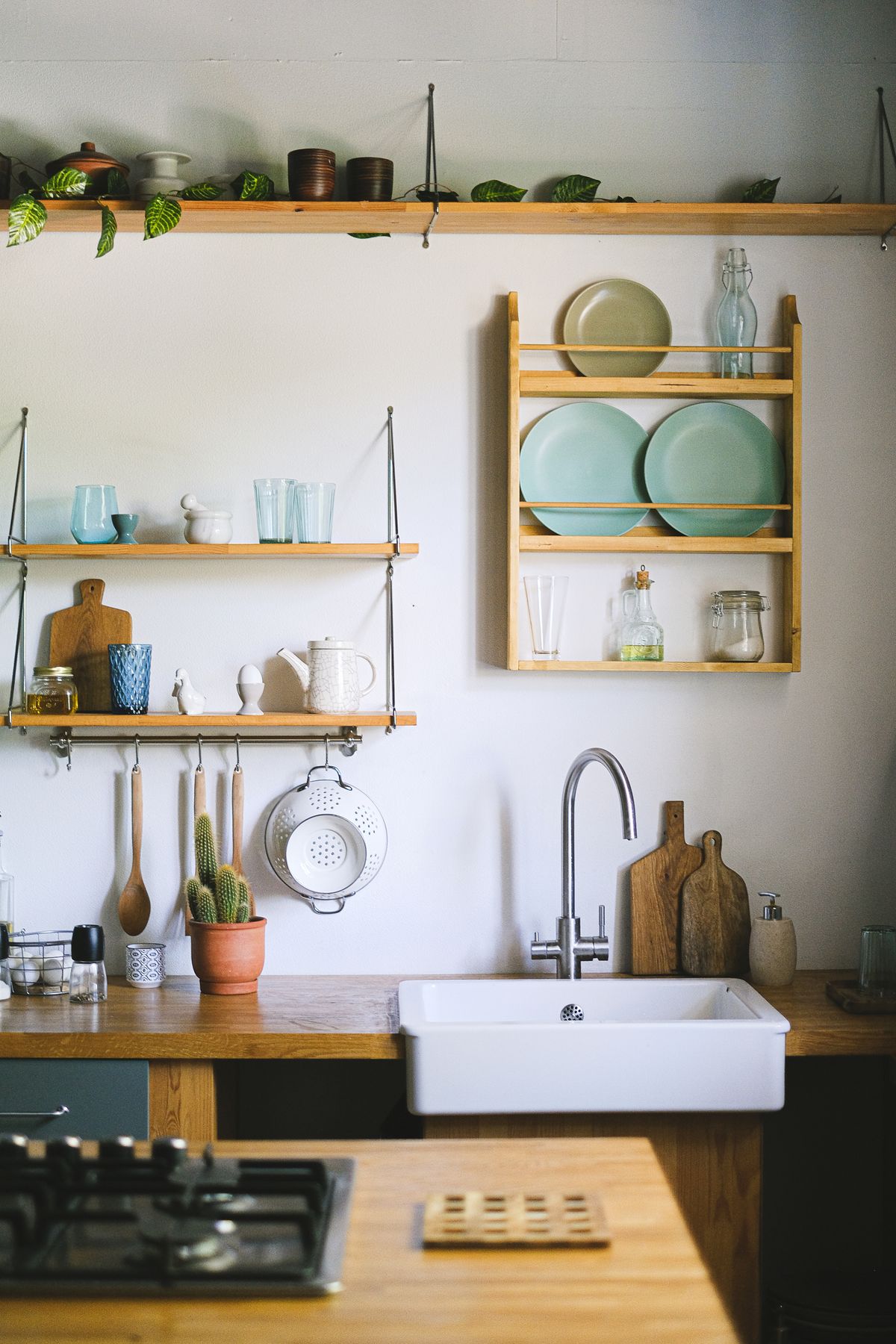
1. Start by Decluttering the Spice Collection
Before buying any organizer, empty every spice jar you own onto the counter. Toss anything faded, clumpy, or older than a year for ground spices (whole spices last two to three years), and note your duplicates — most tiny kitchens hold two or three half-used jars of paprika. Keep only what you actually cooked with in the last three months, plus five or six basics you always want on hand. A spice collection of 15–20 jars fits almost any system below; a collection of 50 fits none of them. Decluttering first means you buy the right size organizer once, instead of the wrong one twice.
2. Decant Into Matching Jars With Big Labels
Mismatched store jars are half the visual chaos. Decanting into matching small glass jars — same size, same lid — instantly calms a shelf or drawer, and uniform jars stack and fit organizers predictably. Label the lids if jars sit in a drawer, and the sides if they sit on a shelf, in large print you can read at arm's length. Include the purchase or expiry date on the bottom of each jar so freshness stays visible. Glass beats plastic here: it does not absorb smells, it seals better, and it keeps strong spices like turmeric from staining everything yellow.
3. Use a Drawer Insert for the Fastest Access
A shallow kitchen drawer with a tiered insert is many cooks' favorite spice system: jars lie at a slight angle, labels face up, and you see everything at a glance without moving a single jar. If your tiny kitchen has even one drawer to spare — often the one beside the stove — a bamboo or plastic drawer insert turns it into a spice drawer for under $20. Keep the most-used spices at the front of the drawer and the rarely used ones at the back, and reserve the drawer nearest the stove for cooking speed. No drawer to spare? The door and wall ideas below work just as well.
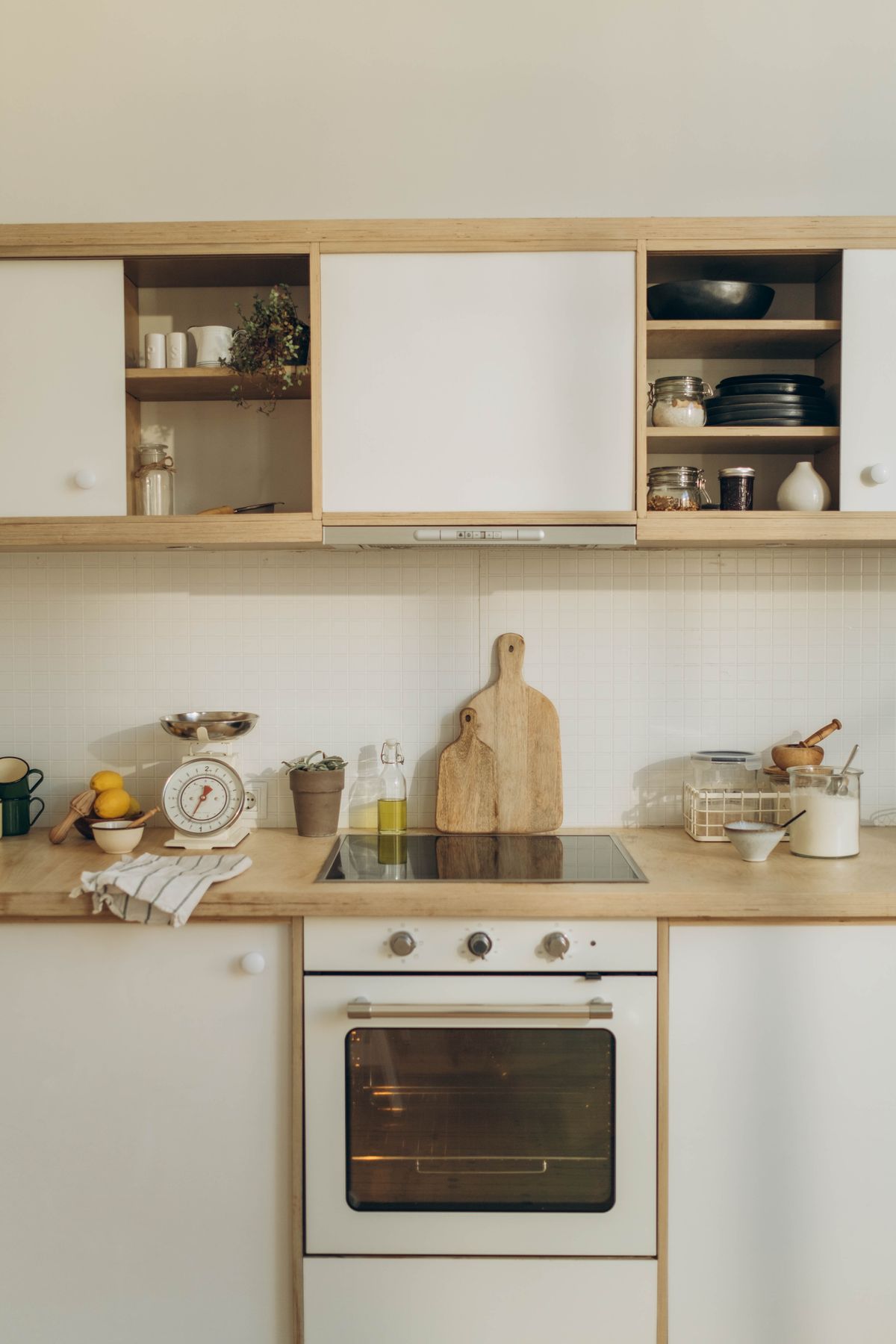
4. Hang Jars on the Inside of a Cabinet Door
The inside of a cabinet door is free real estate in a tiny kitchen. Small adhesive or screw-mounted racks hold jars on the door, using space that otherwise holds nothing, and the spices stay hidden when the door closes. This suits renters too — adhesive racks rated for the weight of full jars remove cleanly with heat from a hair dryer. Measure your door's clearance first: jars must be slim enough that the door still closes, and the cabinet's contents must leave room for the jars to swing in. Pantry and cabinet door racks pair well with broader kitchen organization — see our tiny pantry organization ideas for the rest of the system.
5. Try a Magnetic Strip on the Fridge or Wall
Magnetic spice jars on a steel strip — stuck to the side of the fridge, or screwed to a kitchen wall — turn spices into wall decor and free an entire shelf. This is ideal for tiny kitchens because it uses vertical space that holds nothing else, and grabbing a jar is a one-handed move while cooking. Buy jars with strong magnets (cheap ones slide down a fridge over time, especially with full jars), keep the strip away from the stove's direct heat, and group by cuisine — Italian herbs together, Indian spices together — so you grab a flavor family at once. Test one jar's magnet strength before committing to a full set.
6. Stack a Tiered Shelf Inside a Cabinet
A tiered shelf riser inside a cabinet is the lowest-effort spice upgrade: it lifts back rows above front rows so you can see every label without pulling jars out. No installation, no drilling, and it moves with you when you move apartment. Choose a riser sized to your cabinet's depth (too deep and jars hide behind the door frame; too shallow and space is wasted), and keep tall jars at the back and short ones at the front for a stadium effect. Tiered risers also work inside deep pantry cabinets, where spices otherwise vanish into the dark back corners.
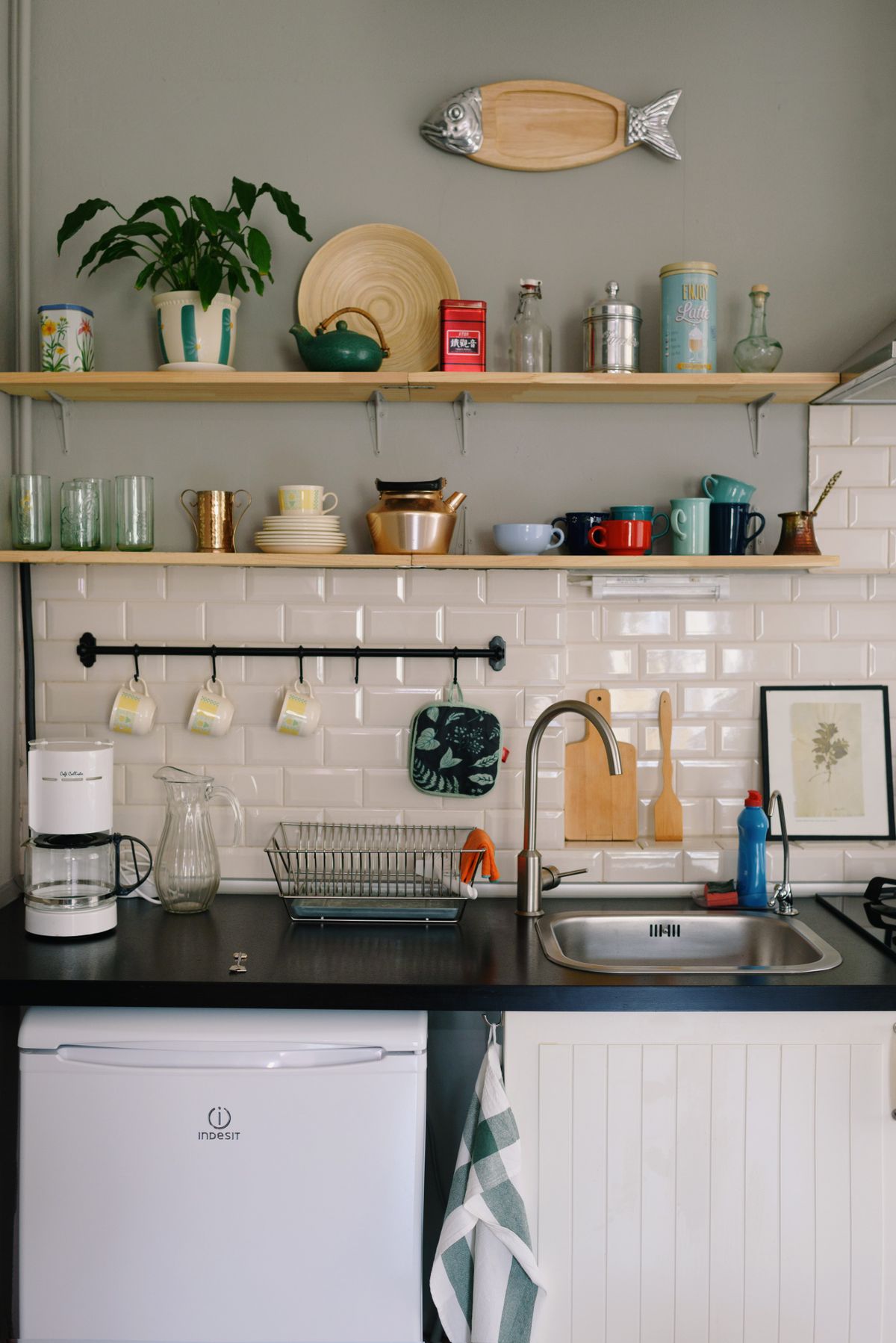
7. Spin It: a Turntable for Deep Cabinets
Deep cabinets are where spices go to die — jars pushed to the back are forgotten until they expire. A turntable (lazy Susan) fixes this with one spin: every jar comes to the front, no reaching, no knocking things over. A single large turntable suits a deep corner cabinet; two smaller ones suit a standard shelf. Look for a turntable with a non-slip base and a low rim so jars do not slide off mid-spin, and keep the turntable to one layer of jars — stacking jars on a turntable defeats the whole point. This is the best fix for the awkward deep cabinet that every tiny kitchen seems to have.
8. Use the Wall Above the Counter — Sparingly
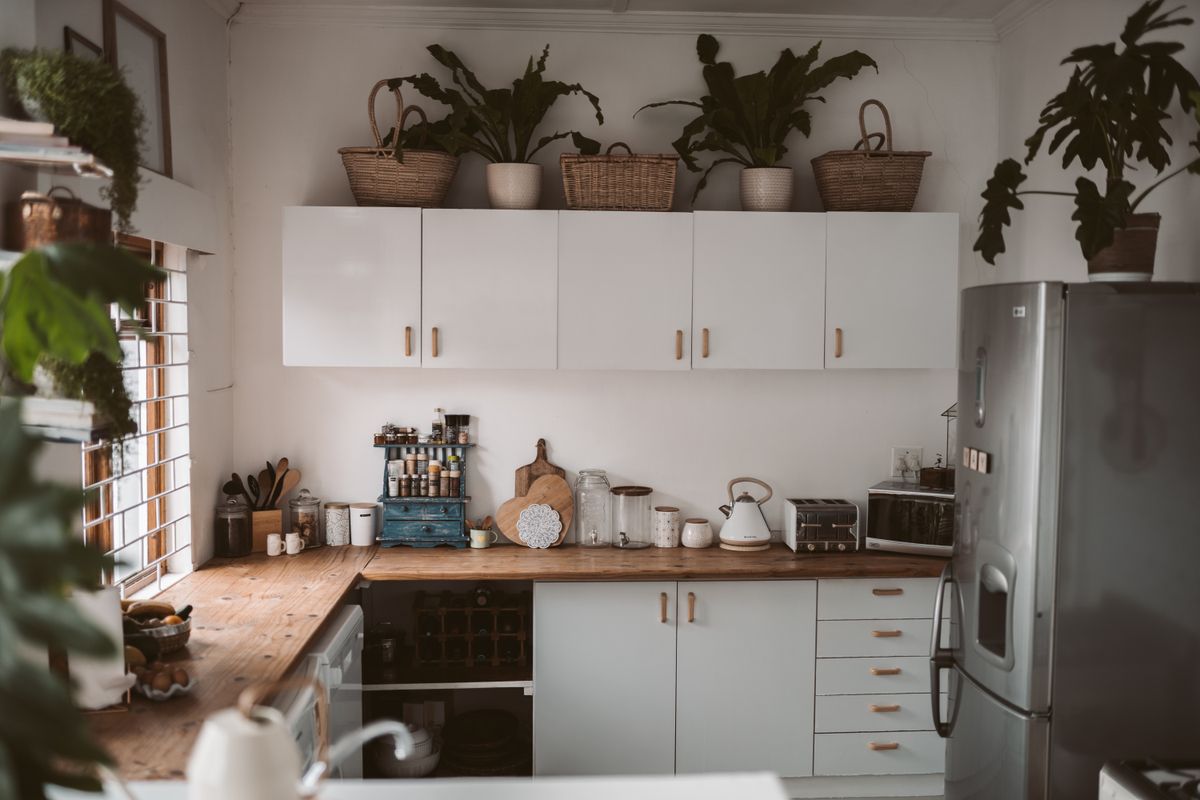
A single slim wall shelf or rail above the counter, holding just your ten most-used spices, puts flavor at your fingertips while cooking. The key word is sparingly: one rail of everyday spices is a cooking station, while three shelves of fifty jars is visual noise in a small kitchen. Mount the rail away from direct steam (not directly above the kettle or the stove's steam path), since humidity dulls spices fast, and keep the rest of the collection in a cabinet. A small rail plus a cabinet system beats an all-on-display wall in both freshness and calm.
9. Keep Spices Away From Heat, Light and Steam
Wherever you store spices, the freshness rules are the same: cool, dark, dry, and sealed. That means not above the stove (heat), not on a sunny windowsill (light), and not beside the dishwasher's steam vent. Ground spices lose potency in 6–12 months in bad conditions but last much longer in a cool cabinet; whole spices kept whole and ground fresh last longest of all. If a jar smells faint when you open it, it is done — replace it rather than doubling the amount in a recipe, which just adds dust flavor. Good storage protects the money you spent on good spices.
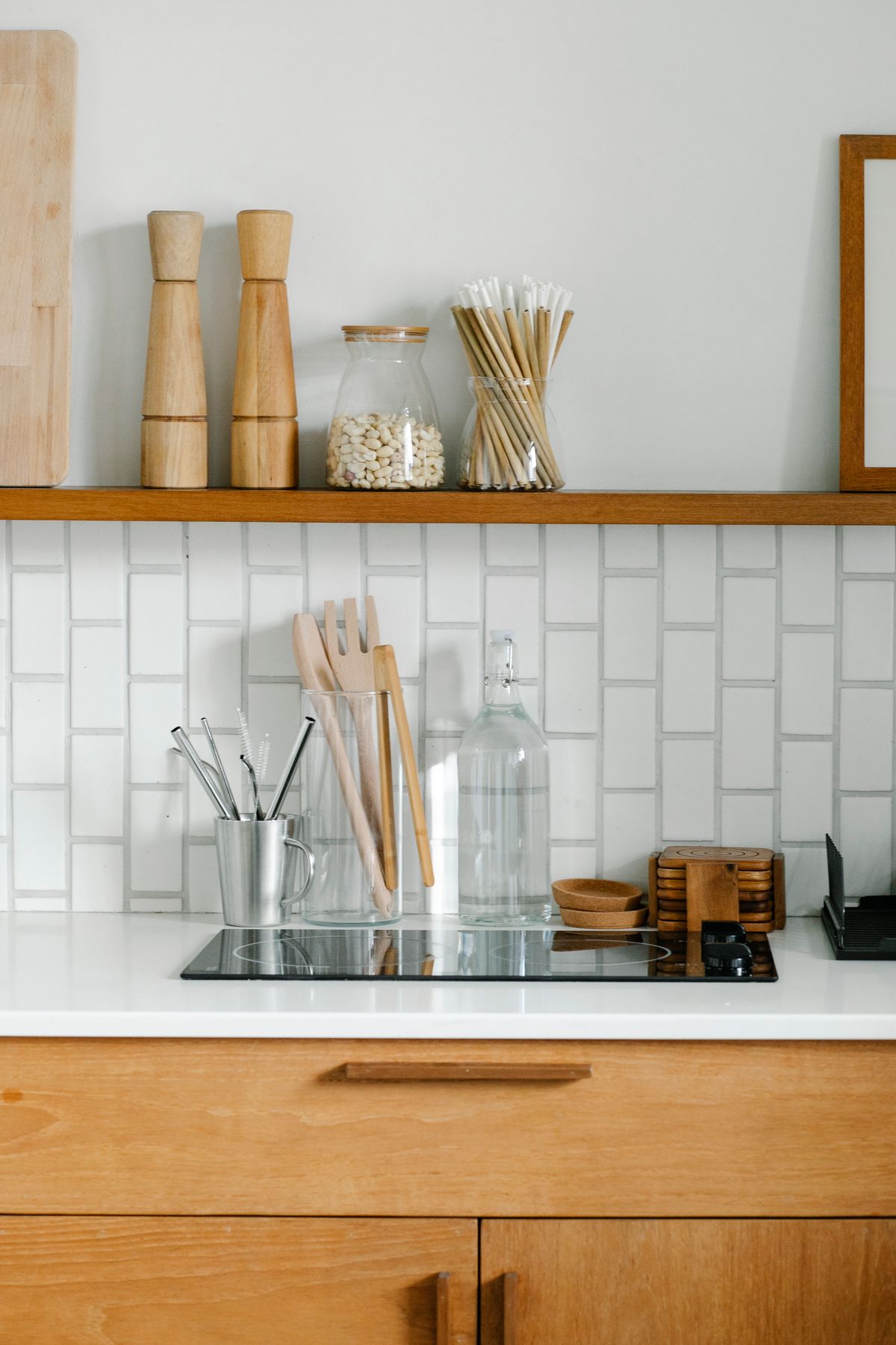
10. Group by How You Cook, Not Alphabetically
Alphabetical spice storage looks tidy and cooks badly. Group by how you actually cook instead: everyday cooking (salt, pepper, garlic powder, paprika), baking (cinnamon, nutmeg, vanilla), heat (chili flakes, cayenne, curry powder), and cuisine kits (taco seasoning spices together, curry spices together). When you cook a curry, you grab one group, not five jars scattered across an alphabet. Label each group zone on the shelf or drawer with a small divider or a colored dot on lids, and keep a tiny "tonight's spices" tray by the stove for the meal you are actually making.
11. Try a Pull-Out Rack for Narrow Gaps
Almost every tiny kitchen has a wasted narrow gap — between the fridge and the wall, beside the stove, at the end of a counter run. A slim pull-out rack on wheels, just 10–15 cm wide, slides into that gap and holds two rows of spice jars, oils, and sauces. It is the highest-density spice storage on this list, and it turns dead space into a full shelf. Measure the gap carefully (including skirting boards, which steal width at the bottom), choose a rack with a handle you can grip, and keep heavier oils at the bottom so the rack does not tip when pulled out.
12. Keep a One-In, One-Out Rule for New Spices
Spice collections grow by impulse: a new recipe needs sumac, a market trip adds za'atar, and suddenly the system overflows. Adopt a one-in, one-out rule — every new spice that enters means one finished or expired jar leaves — and a "try it twice" test: if you have not used a new spice twice within three months, it does not earn permanent shelf space. Keep a small list on the fridge of what you own (phone notes work fine) and check it before shopping, which ends the duplicate-paprika problem for good. For the rest of the tiny kitchen, our tiny kitchen organization ideas extend the same logic to every shelf and drawer.
Conclusion: Find It in Three Seconds
The test of any spice system is simple: can you find the cumin in three seconds, mid-recipe, without moving five jars? Declutter first, decant into matching labeled jars, pick the system that fits your kitchen's one free spot — drawer, door, wall, or narrow gap — and protect spices from heat, light, and steam. Do that, and your tiny kitchen gains a shelf, your cooking gets faster, and you never buy a third jar of paprika again.



0 Comments