
12 Tiny Apartment Coat Closet Organization Ideas
A tiny coat closet has an unfair job: it must hold coats for every season, bags, umbrellas, shoes, and the things you grab on the way out, all in a space barely wider than a door. When it fails, coats slide off hangers, the floor disappears under shoes, and getting out of the house takes five minutes longer than it should. The fix is not a bigger closet. It is a system built for the space you actually have, using every inch from floor to ceiling. These 12 ideas work for US, Canadian, UK, and Australian apartments, including rentals where drilling is limited.

1. Empty It and Count What Actually Lives There
Take everything out and count it honestly: how many coats, how many bags, how many pairs of shoes, and how many items have not been worn in a year. Most tiny coat closets hold at least a third more than they should, including coats kept for sentimental reasons and bags from three phones ago. Donate or store the excess elsewhere, and the closet instantly works better. Keep only the current season's coats in prime position; the rest can wait in a top bin or under the bed.

2. Switch to Slim, Matching Hangers
Bulky plastic and wire hangers waste shocking amounts of rod space and let coats slide off. Slim velvet hangers grip fabric, take up half the width, and look uniform, which makes a crowded closet feel calmer. Use one hanger per coat — doubling up coats on a single hanger is how sleeves get stretched and closets get jammed. Keep a small basket of spare hangers in the closet so new coats do not end up draped over the rod.
3. Add a Second Rod for Short Coats and Jackets
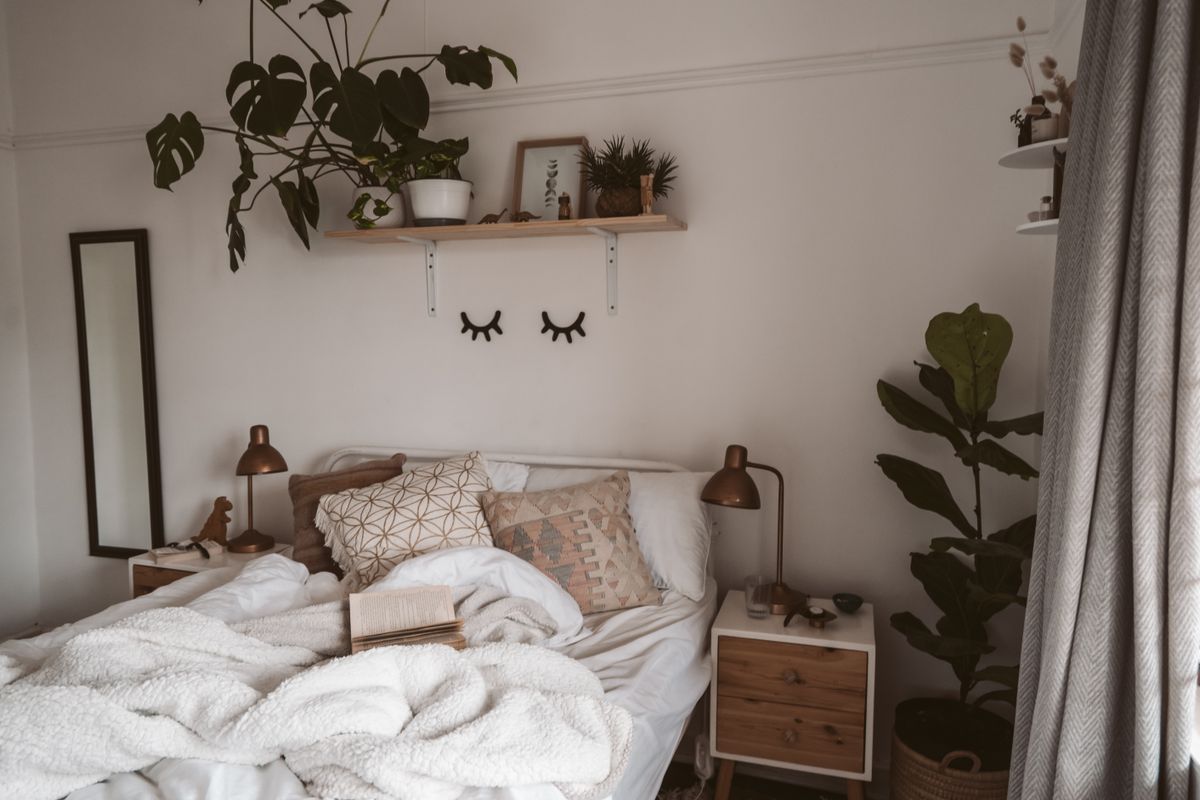
A single high rod wastes the lower half of most coat closets. Adding a second, lower rod for short jackets, kids' coats, and bags doubles hanging space without any construction. Tension rods work in rentals, while a mounted rod holds more weight. Hang long coats on the high rod and short items below, and leave a gap at one end for the one long coat or dress that needs full length. Measure twice: rods too close together make every coat hard to pull out.

4. Use the Door for Shoes, Scarves, and Small Gear
The inside of the closet door is free storage most people ignore. A clear over-the-door organizer holds scarves, gloves, hats, sunscreen, and dog-walking gear that otherwise ends up in a pile. A slim shoe organizer on the door frees the entire closet floor. Keep it light, though: a door loaded with heavy boots will not close properly and strains hinges. Shoes on the door should be the lightweight everyday pairs, not winter boots.

5. Put a Shoe Tray or Low Shelf on the Floor
The closet floor should be a defined shoe zone, not a dumping ground. A low boot tray catches rain, snow, and grit, and a single low shelf above it doubles shoe capacity in the same footprint. Limit the floor to the shoes worn this week — two to three pairs per person — and store the rest elsewhere. In wet climates, a tray with raised edges and a wipeable surface saves the floor and the shoes below the coats from mud splashes.
6. Claim the Top Shelf With Labelled Bins
The top shelf is where out-of-season and rarely used items belong, but only if they are contained. Labelled bins — one for winter accessories, one for summer hats, one for spare bags — stop the top shelf from becoming a place where things go to be forgotten. Use bins with handles so you can pull them down safely, and keep a small step stool nearby if the shelf is high. Never store heavy items up high in a closet you open daily; a falling bin is a real hazard.
7. Hang Bags by Their Straps, Not in a Pile
Bags piled on a shelf become a tangled heap where the one you want is always at the bottom. Hang everyday bags on sturdy hooks on the closet side wall or on the rod itself using shower curtain rings, one bag per ring. Backpacks hang best from a single large hook, while small crossbody bags can share a row of smaller hooks. Keep the bag you grab daily at the front, at shoulder height, so leaving the house takes seconds, not a search.

8. Create a Grab-and-Go Zone for Daily Essentials
Keys, wallet, sunglasses, transit card, and dog leash should live in one small zone at eye level near the door side of the closet: a tiny tray, a magnetic strip, or a row of small hooks. When everything has a single home, you stop patting pockets and retracing steps. Keep this zone tiny on purpose — if it grows, it stops being a launch pad and becomes another junk drawer. One small basket for each adult keeps shared closets from mixing up essentials.
9. Rotate Seasonally — Twice a Year, No More
A twice-yearly rotation is the single most effective coat closet habit. In spring, move heavy winter coats to a top bin or under-bed storage and bring lighter jackets forward; reverse it in fall. While rotating, check for coats that no longer fit, are damaged, or were never worn, and let them go. The rotation takes under an hour, and it means the closet only ever holds what the current weather actually requires, which is the whole point of a small space.

10. Add Motion Lighting So You Can See Everything
Most coat closets are dark, and dark closets hide clutter and swallow small items. A battery-powered motion light — adhesive, no wiring, renter-friendly — changes the closet completely for a few dollars. Mount it at the top or side where it will not be blocked by coats, and choose a warm white so colors read true. When you can actually see the back of the closet, you stop buying duplicates of scarves and gloves you already own.
11. Use Shelf Dividers to Stop the Slide
Open shelves in a coat closet fail because stacks of folded items slide sideways into each other. Simple shelf dividers create lanes for folded sweaters, hats, and bags, so pulling one item does not collapse the rest. One divider per category is enough, and they work on both the top shelf and any mid-level shelf. For very narrow closets, vertical dividers that clip to the shelf edge work better than freestanding ones that eat width.
12. Set a One-In, One-Out Rule
Small closets only stay organized if something leaves when something arrives. Every new coat, bag, or pair of shoes means one old item is donated, stored elsewhere, or discarded. Make the rule visible — a small note inside the door works — and apply it especially to free items like conference bags and promotional totes, which are the quietest closet fillers. Without this rule, even the best system fills up again within a season, and you are back to the morning coat hunt.
Before you reorganize, run through this checklist: measure the closet's width, depth, and rod height, and note where the door swings, so rods, bins, and door organizers do not collide; check your lease before drilling, and favor tension rods, adhesive hooks, and over-door organizers in a rental; and count coats per person before buying anything, since most closet products assume more space than a tiny apartment closet has. Photograph the empty closet and the finished one — the empty photo helps you remember what actually fits, and the finished photo is your reset reference when the closet drifts, as every closet eventually does.
Final Thoughts
Start with the purge, then the hangers, then one door organizer — those three changes alone will transform most tiny coat closets. Add the seasonal rotation, and the system will hold. For more entry and storage ideas, see our guides on small apartment mudroom drop zone ideas and under-bed storage ideas for small apartments. If you only make three changes this weekend, make them the purge, the slim hangers, and one door organizer: together they free more space than any single product, and they cost very little. Live with the result for a month, run the seasonal rotation when the weather turns, and the closet will stay usable instead of sliding back into a pile.



0 Comments